Organizational Connectivity
In This Section
Guide to Sustaining Organizational Change
Section 1.2: Training and Development
Guide to Sustaining Organizational Change
Section 2.3: Tracking and Measuring Progress
Talent Processes
Section 4.0: Pit Stop #4: Training and Development
Guide to Sustaining Organizational Change
1.2 Training and Development
An important consideration to sustain organizational change is continued education for those who are decision-makers as it takes time to put learned actions and behaviours into practice. Below are two types of training that board members and leaders can participate in to foster an environment focused on respecting the differences of others.
1. Board-Specific Training:
a) Training to help new board members grow and get support they need to succeed
- Recruiting diverse board members is not about “checking a box”; it is about supporting the transition of women and/or non-binary individuals, Racialized, Black, and/or People of Colour, 2SLGBTQ+ and/or gender and sexually diverse individuals, People with disabilities, and “Aboriginal” and/or Indigenous Peoples into board positions
- Finding ways to educate people to be a good board member and support their fellow new board members to be successful is critical to the success of the board
b) Training to align on expectations, behaviours and goals of existing and new board members
2. Formalized EDI Training:
Board members should partake in the following formal EDI training:
- Inclusive leadership training: Training on how to become an inclusive leader
- Unconscious bias training: Training on how to become aware of unconscious bias and how to recognize your own biases
Here are two learning modules you can take:
Unconscious Bias Learning Module
Psychological Safety Learning Module
Priority Group
Case Study
These E-Learnings offered by CCRW provide training on inclusive disability practices in the workplace
2.3 Tracking and Measuring Progress
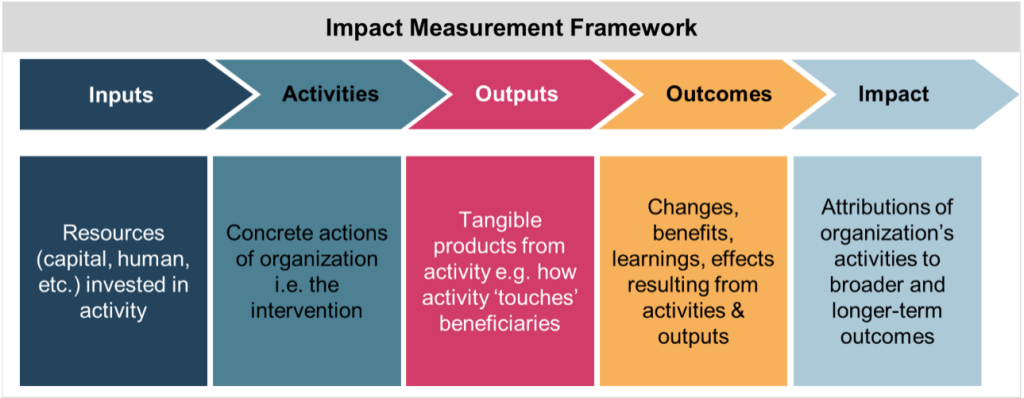
To know whether and how we are achieving the goals of the 50 – 30 Challenge and building belonging in our organizations, we need to measure and track our progress. Without that understanding, there is no clear way of knowing how we are working towards our vision and strategy.
1. Use data to assess gaps and report on a regular basis (at least on a semi-annual basis)
- Identify data that you need to gather (e.g. organizational level, retention, engagement, turnover, self-identification, etc.)
- Gather data required to conduct gap analysis
- Analyze representation at the leadership and board levels – it is important for employees to feel seen and represented in their leadership (both in values and in intersectional identities)
- Go to Section 2.3a in this tool, the Guide to Sustaining Organizational Change, to learn more about collection and management of self-identification data
2. Build ownership and assign accountability
- Who (or which team) is the owner of different initiatives? What activities are being done to work towards that long-term goal?
- How is performance tied to equity and inclusion?
- Build ownership for leaders and board members to move this strategy and vision forward by tying leader and board roles and responsibilities to specific parts of this strategy and tracking progress in moving these goals forward through their performance evaluations
3. Tie the data you are collecting to strategic initiatives to track progress

Considerations for Intermediate / Advanced Organizations
Gender-Based Analysis Plus (GBA+) is the analytical process by which a policy, program, initiative or service can be examined for its impacts on various groups of women and men. GBA+ aligns with the principles outlined in the Canadian Charter of Rights and Freedoms and the Canadian Human Rights Act. The Government of Canada is committed to supporting the full implementation of GBA+ across federal departments and agencies.
2.3.a: Guidance on Self-Identification Data
As part of measuring and tracking progress, organizations can collect self-identification data. It is important to make it clear to people why you are collecting this data and how it will be used.
Reasons why self-identification data should be collected and how it will be used:
- Help organizations have conversations about EDI-related goals and creating a welcoming environment for everyone
- Understand success of EDI efforts and success in creating a space where everyone feels welcome
- Analyze gaps to understand what programs need to be created and which resources to provide
- Evaluate equity of policies and processes
- Measure employee engagement
- Measure success of EDI initiatives
- Maintain compliance with regulation to report on representation of the four designated employment groups in the Employment Equity Act
Case Study
This is an example of a self-identification survey from the Canadian Human Rights Commission which provides guidance on how to collect self-identification data.
2.3.b: Data Management Lifecycle
1. Creation and Collection
- Identify the purpose, objective and intended uses of the information
- Select the appropriate data elements to be collected so that it is fit for purpose
- Notify individuals about the collection, the purpose/objective and intended uses of that data
- Include language at the point of collection to indicate that providing self-identifying data is voluntary, and providing it serves as consent for its use for the specified purposes
- There should never be repercussions or retaliation for an individual deciding not to provide self-identifying data
- Limit data collection to scope and scale of disclosed purposes and uses
- Use multiple choice response format. Include options ‘prefer not to answer’ and ‘I don’t know’ and allow for checking off multiple boxes. Do not use “free text” response format.
- Ensure that self-identifying information is anonymous
2. Storage
- Ensure the self-identifying information is protected by the appropriate physical, organizational, and technological controls corresponding to its level of sensitivity
- Clarify roles and responsibilities to ensure who does what, when, and how in the event the self-identifying information is subject to a security breach
- Ensure that you abide by the rules relating to that client and data as it relates to transferring it across borders
3. Usage
- Ensure the self-identifying information is used only for disclosed purposes and uses
- When aggregating / grouping data for analysis, consider a minimum sample size to maintain confidentiality and anonymity, otherwise there is a risk that a specific respondent could be identified / linked back to their responses
4. Archival
- Ensure the self-identifying information is protected by the appropriate physical, organizational, and technological controls corresponding to its level of sensitivity
- Clarify roles and responsibilities to ensure who does what, when, and how in the event the self-identifying information is subject to a security breach
5. Destruction
- Ensure the information is properly disposed once retention period has expired
- A person should always have a convenient way to ask for their information to be deleted
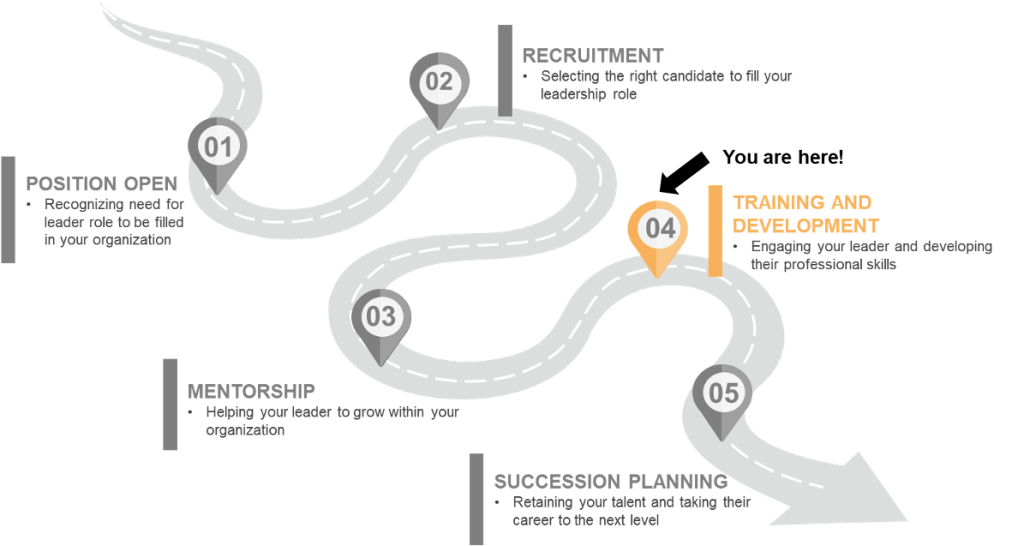
Talent Processes Pit Stop #4: Training and Development
Welcome to Training and Development
To continue building the competencies of your leader and ensuring they are supporting your organization, training and development are critical.
Training and development helps to upskill leaders with various identities and increases your employer brand reputation amongst competitors.
It is important to consider ways you can support your leaders, their growth, and ultimately, their success.
4.1 Training and Development: Training
Training includes resources provided directly by your organization or externally procured to support your talent in learning new skills and developing new competencies.
leading practices:
- Align training with your organization’s operating goals and use corporate communications to ensure all leaders are aware of opportunities
- Provide training that meets the unique identities of different leaders (e.g. Networking and Personal Branding for Women program)
- Offer trainings that meet the unique learning styles and preferences of leaders, such as lectures, gamification and scenario-based trainings
This Executive Training is offered by the Indigenous Leadership Development Institute.
Specific actions to follow:
- Enable employee resource groups (ERGs) or internal priority-group-based associations to provide formal training or informal “lunch and learns” regarding their communities
- Offer training in-house or through external service providers that teach both soft and technical skills required of your leaders
- Ensure all leaders have equal access to training opportunities and training meets their unique needs
- Promote learning throughout the year as a continuous process, not a one-time initiative
- Review and update your training program on an annual basis to keep up with evolving role expectations
4.2 Training and Development: Growth and Development
In addition to training, there are several other ways your organization can support the growth and development of your leaders.
leading practices:
- Host cultural competency workshops for leaders, in partnership with priority-group-based organizations
- Assign internal coaches to leaders who can work with them to action their growth and development goals
Specific actions to follow:
- Establish professional development programs to help leaders achieve their professional goals
- Promote a culture of continuous learning and development through internal communications and messaging from senior leadership
Priority Group
Key Action
Case Study
Considerations for Intermediate / Advanced Organizations
This Cultural Competency Training is hosted by the New Brunswick Multicultural Council.
Training and Development: Regional and Industry Considerations
Industry: Fisheries and Oceans
The ocean sector is lagging behind in attracting a diverse labour force as opportunities in this industry are not highly visible due to their niche, technical training and hiring processes.
To improve inclusion of women and/or non-binary individuals within the sector, consider the following:
- Improve education and awareness that a career in the ocean sector is viable and accessible; partner with women and/or non-binary individuals, allies, and employers
- Sponsor women and/or non-binary individuals to pursue leadership roles within the organizations and encourage them to offer diverse perspectives on company management and talent attraction
- To pursue work as newcomers without prior connections to this field, women and/or non-binary individuals would benefit from additional resources, financial aid (gender issues can complicate pursuit of first-time loans), assets (support to purchase a boat/equipment, obtain a license), access to well-advertised education/financial opportunities, networking and mentorship
Industry: Healthcare
According to a report from Osler, in 2021, only 15% of Executive Officers and 17% of Board Members identified as a woman in the Life Sciences Industry, ranking as the smallest percentage from 13 industries.
Diversity in healthcare is important to ensure equitable healthcare outcomes for staff and patients as well.
Consider the following:
- Provide training to staff to understand the importance of accommodation to meet priority group healthcare needs
- Dedicate leaders to oversee training and partnerships for priority group healthcare education
This Inclusion Playbook from the 519 discusses how to support 2SLGBTQ+ and/or gender and sexually diverse individuals and learn about leading practices.
Case Study
Scenario: Checkpoint 2

Back to All Tiles